The Walking Zombie 2: Shooter
- 4.4
- Rating
- 50.00M
- Installs
- Free
- Price
 Analysis by App-foxy
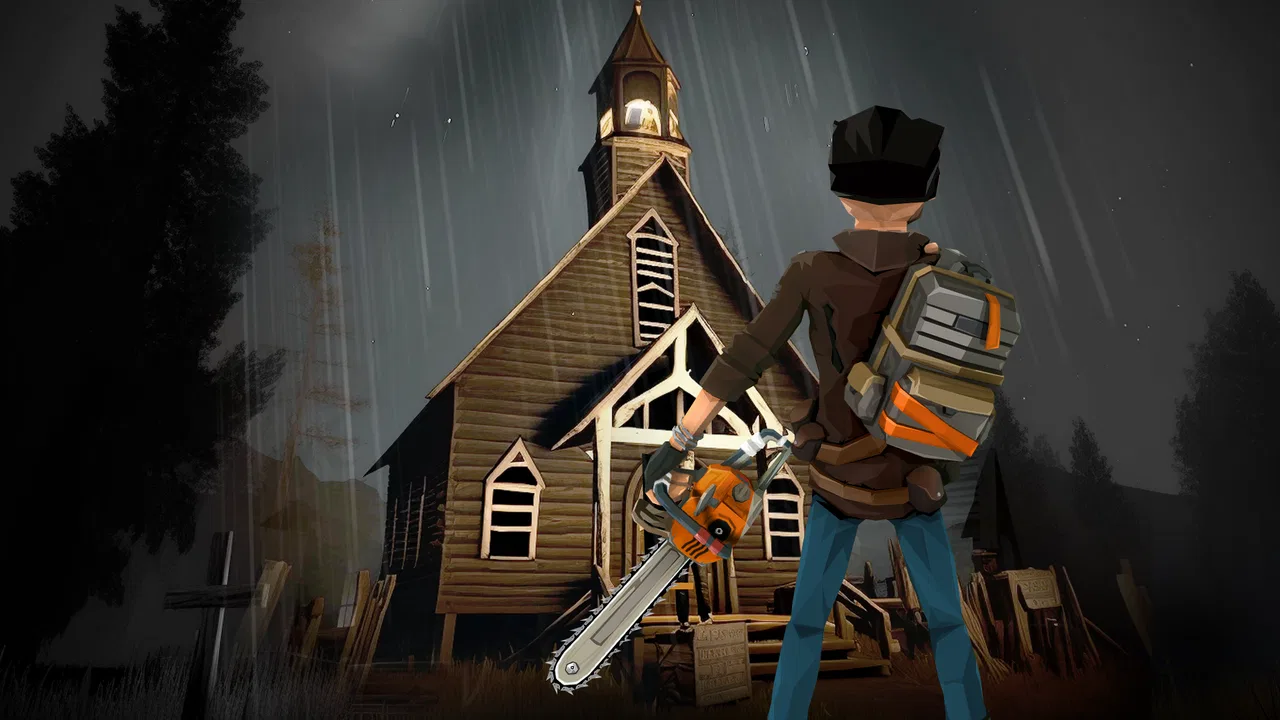
I spent time with The Walking Zombie 2 as a mobile action game and found a surprisingly substantial single-player shooter hiding behind its simple polygon look. It is built around a zombie-filled world, but it is not just a sequence of quick shooting galleries. Exploration, missions, character growth, equipment choices, and resource management all affect how smoothly a session goes. That combination makes it more interesting than a basic wave shooter, although it also means the game asks for more patience than its title might suggest.
The game is free to start and comes from Alda Games. It is aimed at Teen players, runs on Android from version 7.0 onward, and includes optional purchases ranging from $0.99 to $99.99 for individual items. Its average rating is 4.4 from around 1.6 million ratings, with more than 50 million installs, so this is clearly not a small experiment. Those figures make sense after playing it: the game has enough systems and content to feel like a proper mobile adventure rather than a disposable time-filler.
How the everyday play loop actually works
My normal session starts with a simple decision: do I want to push the next objective, explore for useful supplies, or improve the character before taking on a harder encounter? That choice matters because rushing through missions can leave you short on ammunition, healing items, or a weapon that suits the situation. The best rhythm is usually to read the objective carefully, check what I am carrying, and then enter the area with a clear plan instead of reacting to every zombie in front of me.
You May Also Like

 Blood Strike: 2.5 Anniversary
Blood Strike’s Loadouts Turn Every Drop Into a Tactical Gamble
A close look at Blood Strike’s custom loadouts: how fast access to signature weapons reshapes its battle royale rhythm, rewards preparation, and narrows the gap between fights.

 Pandora - Music & Podcasts
Pandora’s Music Is Easy to Start, but Harder to Recover
Pandora’s strength is its low-effort path from a seed to a station. Its weak spot is how much confidence it asks you to place in connection, setup, and quiet recovery.

 8 Ball Pool
 Is Built on Rivalries, Rematches, and Routine
A close look at the rivalries, rematches, shared routines, and unanswered safety questions that turn a quick pool match into a persistent mobile community.

 Samsung Music
’s Quiet Strength Is Playing What You Already Own
Its reach comes less from spectacle than from dependable access to a personal library. That simplicity is both the app’s strongest retention engine and its ceiling.

 AccuWeather: Weather Radar
AccuWeather Review: A Quick, Clear Forecast for Everyday Decisions
For everyday plans, the best forecast is the one you can understand quickly. AccuWeather makes rain timing, radar, and local conditions easy to act on, with a few trade-offs.

 Hill Climb Racing
Why Hill Climb Racing Still Turns Crashes Into One More Run
A tiny car, a bumpy hill and one more upgrade: Hill Climb Racing keeps resurfacing because its simple chaos makes every near-miss feel personal.
More From Our News Desk



The shooting itself is easy to understand. I aim, fire, reposition, and try not to let enemies surround me. The polygon graphics keep the presentation readable, which helps when several threats are moving at once. At the same time, the game is not so simple that accuracy becomes irrelevant. Wasting shots can turn a manageable fight into an awkward retreat, particularly when a stronger enemy appears after I have already spent too much ammunition on weaker targets.
What gives the game its identity is the role-playing layer around those fights. Progress is not only about improving reflexes. I also have to think about how my character is developing, which equipment is worth carrying, and whether a reward helps my current style. A player who enjoys making small decisions between missions will get more from this than someone looking for uninterrupted action.
One realistic use case is a short evening session after work or school. I can complete a small objective, sort through supplies, and stop without needing to commit to a long multiplayer match. The offline single-player design is especially convenient here. I do not need to coordinate with friends or depend on an active community to make progress, and the game suits moments when I want something more involved than a two-minute arcade round.
That offline focus also changes the mood. There is no pressure to keep up with other players, and the campaign structure lets me play at my own pace. On the other hand, anyone who mainly enjoys competitive leaderboards, live events, or cooperative teamwork may find the experience quiet. This is a game about managing my own run through a dangerous setting, not proving that I am better than another player.
What to do before leaving a safe area
I learned to treat preparation as part of the game rather than a chore between missions. Before setting out, I check the current objective, review the weapons available to me, and make sure I am not carrying a collection of items that looks useful but does not support the immediate task. A compact loadout is easier to understand in a tense fight, while carrying every possible option can make decisions slower.
It is also worth looking at the character’s development before spending rewards. A small improvement that supports the way I already play is often more valuable than a choice made simply because it is available. Players who prefer careful shooting should not automatically copy an aggressive close-range approach, and the reverse is also true. The role-playing elements work best when they reinforce a consistent habit instead of creating a scattered character.
Exploration deserves deliberate attention. I do not sprint through every area just to reach the objective, but I also avoid wandering without a reason. Searching side paths can be worthwhile when I need supplies or want to understand the layout, yet exploration takes time and may expose me to extra danger. My practical rule is to explore when my resources are stable and the route looks manageable, then focus on the main objective when the character is already worn down.
That approach answers an important question for new players: should every mission be completed as quickly as possible? In my experience, no. Speed is valuable when the route is familiar, but early on, a slower run teaches more about enemy placement, cover, weapon behavior, and resource use. Once I know an area, I can move with purpose. Before that, rushing mostly creates avoidable mistakes.
Settings and controls worth checking first
The first settings I would inspect are the ones that affect aiming, movement, and visual comfort. Mobile shooters can feel dramatically different depending on sensitivity and button placement, and a control layout that works for one person may feel cramped to another. I prefer to make small changes, play a short section, and adjust again rather than changing everything at once. That makes it easier to identify which setting actually helped.
Touch aiming deserves particular attention. If the camera moves too slowly, turning toward a sudden threat becomes frustrating. If it moves too quickly, lining up a careful shot becomes harder. I found that a moderate setup is more useful than chasing maximum speed, because this game alternates between movement and deliberate shooting. The right balance lets me react without sacrificing control.
I also recommend checking the sound level before playing in public. Audio can help establish the atmosphere and make encounters feel more immediate, but not every situation allows loud effects. If I need to play quietly, I compensate by watching the screen more carefully and avoiding careless movement. That is not a special trick; it is simply a reminder that reducing audio feedback can make a shooter feel less forgiving.
Older phones may need a little patience with visual settings. The game’s polygon presentation is relatively clean, but busy scenes can still feel less comfortable if the device struggles. I would rather choose a stable, readable presentation than push visual quality at the cost of delayed input. In a shooter, a responsive control feels more important than a small improvement in appearance.
Because the minimum Android requirement is version 7.0, the game is accessible to many older devices, but compatibility on paper does not guarantee the same experience everywhere. Screen size, touch response, and hardware performance can all affect comfort. Before investing in optional purchases, I would play long enough to confirm that aiming and movement feel acceptable on the specific phone or tablet being used.
Habits that make missions faster and safer
The most useful repeatable habit I developed was separating target priority from target distance. The closest zombie is not always the most dangerous one. A threat that can surround me, interrupt movement, or force me into a bad position may deserve attention before a slower enemy that happens to be nearer. Thinking this way reduces panic and prevents me from wasting time firing at whatever is easiest to see.
I also avoid standing in one place after every shot. Constant movement is not automatically better, because moving without a plan can ruin accuracy, but small repositioning steps make it harder for enemies to close in. I shoot, check the space around me, and move toward a safer angle rather than waiting until the screen is crowded. This is especially useful for players who tend to focus so intensely on aiming that they forget the wider battlefield.
Another practical pattern is to use familiar routes for repeat attempts. When I know where a fight begins and where a retreat path leads, I can conserve attention for the difficult part of the mission. I do not have to rediscover every corner, and I can judge whether an optional detour is worth the risk. This turns knowledge of the environment into a real advantage, even without relying on complicated tactics.
Resource discipline makes an even bigger difference. I try not to treat every encounter as an excuse to use the strongest available option. Saving valuable supplies for enemies that genuinely require them gives me more flexibility later. At the same time, extreme hoarding can be just as harmful: carrying resources through several failed attempts without using them does not help. The useful middle ground is to spend enough to survive cleanly, then rebuild before taking another major risk.
For a player who often has only a few minutes, I would recommend ending a session after a clear stopping point rather than quitting in the middle of a difficult attempt. Completing an objective, sorting equipment, or reaching a safe transition makes the next session easier to resume. The offline format supports this kind of personal routine, while the mission-based structure gives each session a natural purpose.
Where the role-playing systems help and where they slow things down
The RPG elements give the shooting more meaning. A new weapon or character improvement can change how I approach the next mission, and rewards feel more useful when they solve a problem I have actually encountered. This is a stronger design than simply handing out upgrades that make every fight identical. I notice the difference most when a previously uncomfortable situation becomes manageable because I prepared for it.
There is a trade-off, though. Progression adds decisions, and those decisions can feel like friction when I just want to shoot zombies. Sorting equipment, considering improvements, and judging whether a reward fits my build all take time. Players who prefer a pure arcade experience may see these systems as interruptions. In that case, a simpler action game would probably be a better choice.
The optional purchases are another point to consider. The game is free to play, but individual in-app items can cost from $0.99 to $99.99. I would approach those purchases cautiously and first decide whether the basic loop is enjoyable without them. The important question is not whether an item is available, but whether buying it improves the experience enough to justify the expense. For me, the game is more satisfying when progress comes from learning the encounters and managing supplies rather than immediately paying to smooth every obstacle.
Parents should also keep the Teen content rating in mind. The subject matter is built around zombies and shooting, so this is not a gentle cartoon adventure despite the simplified visual style. The polygon graphics reduce realism, but they do not change the action-focused tone. I would judge it by the player’s maturity and comfort with that theme, not by the bright or low-detail appearance alone.
Advanced limits experienced players should accept
After becoming familiar with the basic loop, the main challenge is not discovering a secret shortcut. It is accepting that the game rewards consistency more than reckless experimentation. I cannot turn every encounter into a speed run, and some situations still punish poor preparation even when I understand the controls. The best advanced habit is to recognize which fights are worth forcing and which ones call for a reset, retreat, or more careful setup.
The offline structure is both a strength and a boundary. It means I can play without depending on a connection or other players, but it also means the long-term motivation comes from the campaign and personal improvement. If I finish a difficult section and want endless social competition afterward, this game may not provide the same energy as a multiplayer shooter. Its strengths are independence, atmosphere, and progression rather than constant novelty from human opponents.
The visual style has a similar compromise. Polygon graphics help the game maintain a distinct identity and keep the action visually clear, but players expecting realistic environments, detailed character animation, or a cinematic horror presentation may be disappointed. I think the style works because it supports readability and keeps the world approachable, yet it is still a stylistic choice that will not suit everyone.
Another limit is the amount of attention required during longer sessions. Shooting, movement, inventory decisions, and progression all compete for focus. That makes the game engaging, but it can also feel tiring on a small screen. I get better results by playing in focused bursts, adjusting the controls when my hands feel strained, and stopping before frustration turns a manageable mission into a careless one.
Compared with a straightforward zombie survival game, this one offers more structure and character development. Compared with a competitive mobile shooter, it offers less social pressure and fewer reasons to compare performance with others. Compared with a pure RPG, its combat is more immediate and its decisions are more closely tied to aiming and positioning. That middle ground is the reason I kept returning, but it is also why the game may not satisfy someone seeking one narrowly defined genre.
My verdict after settling into its rhythm
The Walking Zombie 2 is a good recommendation for Android players who want a free, offline, single-player action game with shooting and RPG decisions rather than a short arcade distraction. I especially like it for independent play: I can pick it up without waiting for a team, prepare for a mission, and improve through better habits instead of relying only on faster reactions.
My strongest advice is to spend the opening sessions learning the workflow. Adjust aiming until it feels dependable, check supplies before missions, prioritize threats instead of firing at the nearest target, and use exploration selectively. Those habits make the game feel much less chaotic. They also reveal its real appeal: the satisfaction comes from combining preparation with execution, not from holding the fire button and hoping the next wave disappears.
I would skip it if I wanted competitive multiplayer, realistic zombie horror, or a completely uncomplicated shooter with no inventory or character decisions. I would also be careful with optional spending until I knew the free experience suited me. But for someone who likes campaign progression, offline access, polygon visuals, and the small tactical choices that build into better runs, Alda Games has made a surprisingly deep package.
In the end, I see it as a patient player’s action game. It rewards the person who checks the route, learns from a failed attempt, and treats ammunition and positioning as part of the challenge. It does not remove every rough edge, and its RPG layer can slow the pace when I want immediate action, but the combination is distinctive enough to stand out. If that balance sounds appealing, this is one of those free mobile games worth trying before deciding whether it deserves a permanent place on your device.
FAQs for The Walking Zombie 2: Shooter
01What is The Walking Zombie 2: Shooter?
The Walking Zombie 2: Shooter is a first-person action RPG set in a post-apocalyptic world overrun by zombies. You explore ruined locations, complete story missions and side quests, collect supplies, talk with survivors, and fight different types of undead. The game combines shooting mechanics with character progression, crafting, dialogue choices, and light survival elements, giving it more variety than a straightforward zombie shooter.
02Is The Walking Zombie 2: Shooter free to download and play?
Yes, The Walking Zombie 2: Shooter can generally be downloaded and played for free, although availability and monetization may vary between Android and iOS. The game may include advertisements, optional purchases, or other in-app offers. You can progress through the main experience without necessarily buying anything, but players who want to reduce interruptions or obtain certain conveniences should review the store listing and purchase details before downloading.
03Does the game require an internet connection?
The Walking Zombie 2: Shooter is primarily designed as a single-player experience, so many of its core activities can usually be enjoyed without a constant internet connection. However, certain features, advertisements, cloud-related functions, updates, or in-app purchases may require access to the internet. It is best to launch the game online at least once and check its current requirements, especially after installing a new version.
04Is The Walking Zombie 2: Shooter suitable for children?
The game is aimed more at teenagers and adults than young children. It contains frequent zombie combat, firearms, blood, frightening post-apocalyptic themes, and scenes involving danger and death. Dialogue and story situations may also be more mature than those found in a family-friendly adventure. Parents should check the age rating for their region, review the content, and consider whether the game’s violence and atmosphere are appropriate.
05What devices are needed to run The Walking Zombie 2: Shooter smoothly?
The Walking Zombie 2: Shooter is available for mobile devices, but performance depends on the phone or tablet’s operating system, processor, memory, graphics capability, and available storage. Older devices may experience longer loading times, reduced frame rates, or visual compromises. Before downloading, check the current Android or iOS store requirements, keep enough free space for installation and updates, and close background apps for smoother gameplay.
Pros
- Large open world with plenty of side quests and locations to explore.
- Offline play makes it convenient when you have no internet connection.
- RPG progression lets you improve skills
- weapons
- and survival abilities.
- Varied weapons and enemies keep combat from feeling completely repetitive.
- Distinct visual style runs smoothly on many mid-range Android devices.
Cons
- Frequent ads and optional purchases can interrupt the free-to-play experience.
- Some missions involve long travel between objectives with limited fast travel.
- Enemy behavior can feel predictable after extended play sessions.
- Inventory management becomes tedious when collecting many weapons and items.
- The story and dialogue may feel simplistic compared with premium RPG shooters.

The Walking Zombie 2: Shooter
Gallery